Protecting Livestock, Pets, Wildlife, and People from New World Screwworm
Animal Health Industry Actions
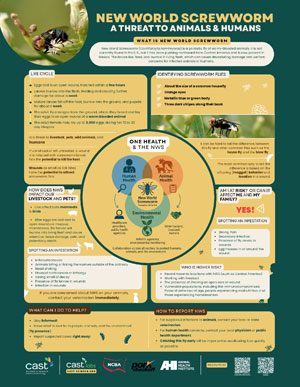
Download Fact Sheet
Following the detection of New World Screwworm (NWS) in the United States, the AHI is committed to helping veterinarians, animal owners, farmers, ranchers, and public officials respond to this serious pest.
Though the current risk to animals, humans, and the food supply due to New World Screwworm remains low in the U.S., the companies that make animal medicines have been working closely with FDA’s Center for Veterinary Medicine (CVM) to help ensure veterinarians, animal owners, farmers, and ranchers have the tools they need to combat this pest. We are committed to ensuring supply is coordinated to support areas of greatest need, and that products are used appropriately to support this response.
Animal health companies are also working hard to develop new countermeasures, such as vaccines, for use against NWS as a complimentary strategy to once again eradicate this pest from the United States. Vaccines can act as a rapidly deployable tool to help fight screwworm while additional production capacity of sterile male flies is pursued in the coming years.
The Role of Animal Health Products
Animal health products are one part of the broader New World Screwworm response. Rapid detection, reporting, treatment, movement controls, and eradication tools—including sterile fly efforts—all play important roles in preventing this pest from becoming established again in the United States. Following are essential considerations for using animal health products:
- It’s important to use products exactly as specified on approved labels, authorization letters, fact sheets, and other applicable conditions of use.
- Products made available for New World Screwworm may have specific requirements for species, indications, dosing, route of administration, withdrawal periods, and other conditions. These details are especially important for food-producing animals and for products authorized under emergency pathways.
Additionally, AHI is urging appropriate and judicious use of parasiticide products to help preserve their effectiveness. Many products used to prevent or treat parasitic threats like New World Screwworm are also important tools against a wide range of animal parasites, including ticks and internal parasites. Using these products only as directed can help preserve their effectiveness, reduce unnecessary resistance pressure, and ensure they continue to work long after New World Screwworm is again eradicated.
Preventing New World Screwworm Infections
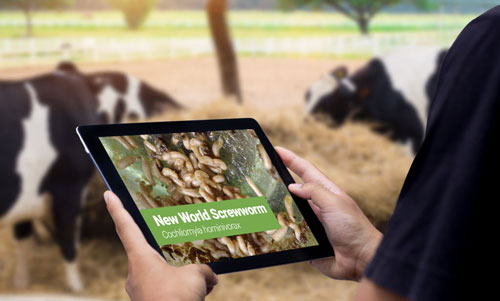
Veterinarians and pet owners can proactively prevent New World Screwworm (NWS) infections by managing wounds that create ideal conditions for infestation. The U.S. Animal and Plant Health Inspection Service (APHIS) highlights that protecting pets and livestock from wound-causing parasites, such as flies and ticks, is a vital preventive measure. AHI supports this approach, recognizing the essential role parasiticides play in safeguarding livestock and pet health. We recommend using these products as directed and in consultation with a veterinarian to ensure proper protection or treatment of New World Screwworm.
AHI encourages veterinarians, farmers, ranchers, and animal owners to inspect animals closely, report suspected cases immediately to animal health authorities, and consult current guidance from USDA, FDA, state animal health officials, and licensed veterinarians. In affected areas, animal owners should follow official guidance on wound care and control of other wound-causing parasites to reduce risk.
Below are links to additional information provided by government agencies and AHI members.